
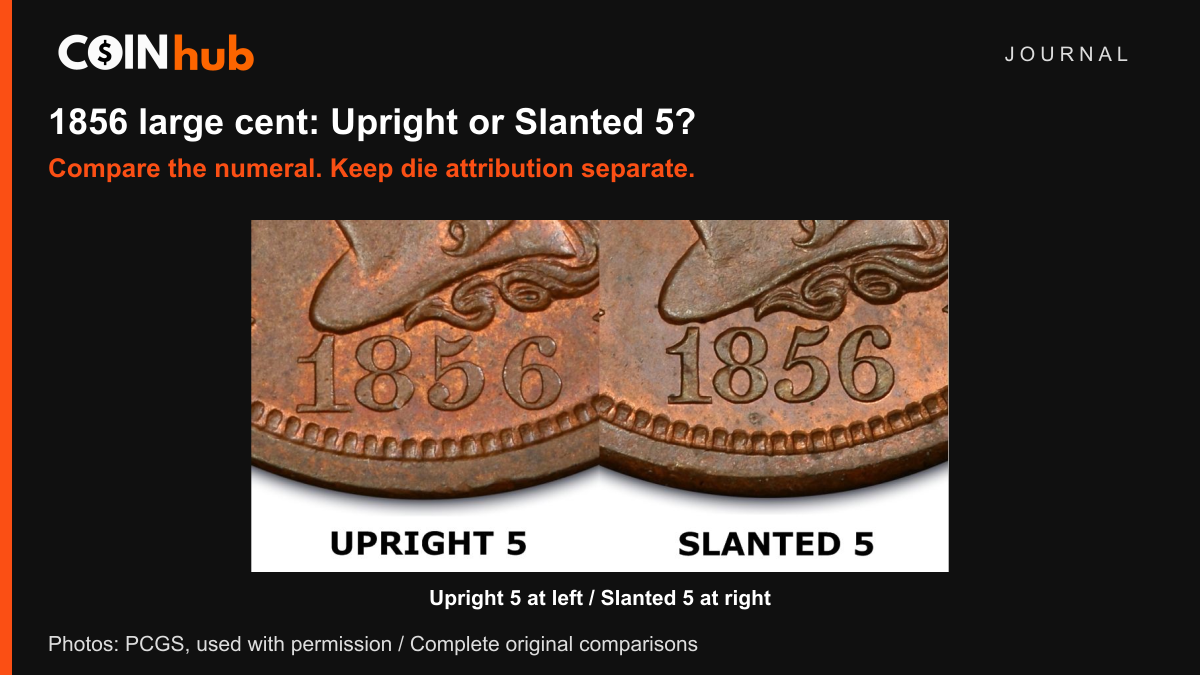
Look at the shape of the 5
An 1856 Braided Hair large cent has one of two major date styles: Upright 5 or Slanted 5. The names describe the numeral in the date on the front. In the genuine PCGS comparison above, Upright 5 is at left and Slanted 5 is at right. A full date and a clear view of the numeral are the best starting points.
This check belongs to the large copper cent with Liberty's portrait. An 1856 coin with a flying eagle belongs to a different design and a separate collecting question. Establish the design before using a listing, price guide or variety label.
Compare the numeral with the coin held upright
Start with a photograph of the whole front, also called the obverse. Keep Liberty facing left and the date below the portrait. Then examine the 5 in a closer view. A tilted photograph can change how a numeral seems to lean, so retain the full-coin view alongside the detail.
PCGS describes the Slanted 5 as leaning forward in its Slanted 5 reference. Compare its upper portion and overall outline with the labelled photo. The Upright 5 reference gives the other major style. Use the whole numeral rather than a scratch or a bright edge in one photograph.
| What you check | What it tells you |
|---|---|
| Liberty portrait and full 1856 date | You have the right design and year for this comparison. |
| Outline of the 5 | It can support Upright 5 or Slanted 5 when the detail is clear. |
| Whole front and back | They preserve the evidence needed for a more specific variety check. |
| Surface condition | It remains a separate part of grading and any value comparison. |
The original comparison labels are retained in our graphic. Each detail is a photographed reference, not a scale drawing or a promise that your coin will have the same color. Light, wear and surface changes can affect what you see.
What a date-style label leaves open
Upright 5 and Slanted 5 are broad variety names. They do not identify every die detail. A die is the metal tool that strikes a design into a coin. Several dies can share a date style while having other small differences.
PCGS lists more specific N-number varieties under these major groups. For example, its N-14 listing also carries Slanted 5. Reading that numeral alone cannot establish N-14. If a holder or seller gives a specialist number, save it exactly and compare the required details on both faces.
Keep these questions in separate fields: date style, detailed variety, grade and surface notes. A clear Slanted 5 can coexist with an unresolved specialist attribution. You can record the feature you have verified without filling in the rest.
When the 5 is worn or unclear
Take another photograph with gentle light from a different direction. Keep the camera square to the coin, and avoid filters that change the outline. Save a full front, a full reverse and the close-up used for your comparison.
Leave the variety undetermined if wear, corrosion or damage hides the shape. Do not rub the date or trace it with a tool. That can change the surface you need to study. Our coin-handling guide explains how to protect a coin during a closer look.
Use the right comparison before assigning a value
The famous 1856 Flying Eagle cent has its own history and market. Its prices do not transfer to an 1856 Braided Hair cent. Use our Flying Eagle guide only for that design; the large-cent and small-cent comparison helps explain the different formats.
A date-style identification also does not set a price. Match the design, variety, grade, surfaces and sale date when looking for sold examples. A Proof listing or a damaged coin may be a poor comparison for a regular circulation strike. Our price-guide and auction-result checklist explains how to keep those differences visible.
A useful collection note might read: “1856 Braided Hair cent; Slanted 5 supported by the date photo; detailed N-number attribution unresolved.” Add the source link and your photographs. That record makes the next review easier without turning a broad label into a complete attribution.
References checked October 12, 2026: PCGS CoinFacts listings for Upright 5, Slanted 5 and N-14. Original comparison photographs: PCGS, used with permission; complete labels retained and images resized. This guide identifies a date style and does not authenticate, grade or appraise an individual coin.