
Start with the reverse, not a price tag
Quick answer: The regular 1859 Indian Head cent has a laurel wreath around ONE CENT and no shield above the denomination. It is the first year of the series and a one-year reverse type. The missing shield is normal for 1859, not evidence of a mint error.
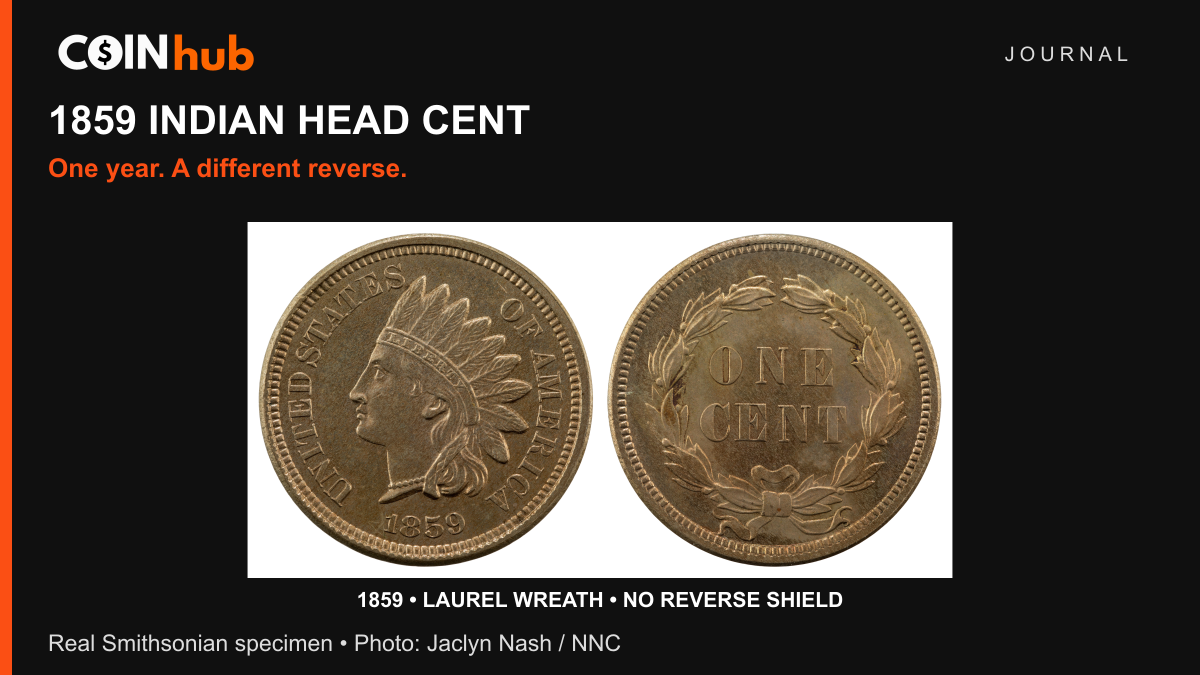
A date can identify an issue, but the reverse explains why collectors set this cent apart. Turn the coin over before comparing it with a later Indian cent. On the Smithsonian specimen pictured above, the narrow wreath curves around the denomination and remains open at the top. A bow joins its lower ends.
The detail that separates 1859 from later cents
PCGS identifies the 1859 cent as both the first issue of the Indian Head series and a one-year type. A shield was added to the reverse in 1860. The change gives a collector a visible design boundary, rather than merely another date to fill in an album.
The familiar left-facing portrait and feathered headdress can make two dates look similar at a glance. Use the entire design instead of one familiar feature. Read the date, turn the coin over, and compare the wreath and upper reverse with an appropriate reference.
| Check | Regular 1859 design | What it establishes |
|---|---|---|
| Date | 1859 below the portrait | The year being examined |
| Reverse center | ONE CENT | The denomination |
| Surrounding design | Narrow laurel wreath, tied below | The reverse type to compare |
| Above the denomination | Open space; no shield | A normal feature of this one-year type |
This checklist describes the regular issue. It does not authenticate a coin. An inconsistent date and reverse, an altered surface or a poor photograph calls for closer review before a confident attribution.
The original copper-nickel specifications
Stack's Bowers' Type 1 reference lists James Barton Longacre as the designer. Its specifications are 88% copper and 12% nickel, a nominal weight of 4.66 grams, a 19 mm diameter and a plain edge. The reference records 36,400,000 business strikes.
These specifications describe the issue as made. A used coin can lose weight, a scale can be inaccurate, and an object can match a nominal measurement without being genuine. Measurements are supporting observations. They do not replace examination of the design and surfaces.
The alloy also explains why an 1859 cent belongs with the earlier copper-nickel portion of the series. The later transition to bronze is a different subject. CoinHub's 1864 copper-nickel versus bronze guide covers that change without treating every Indian cent as the same physical type.
Read the real photograph carefully
The paired photograph shows both faces of a National Numismatic Collection specimen. Use it to locate the date, denomination, wreath and open upper reverse. It is a design reference, not a promise that every genuine 1859 cent will have the same color, sharpness or surface appearance.
A photograph can make a weak area look worn, hide a scratch in a reflection or exaggerate a color cast. NGC's Indian cent grading discussion explains why strike and surface quality matter in this series. Assigning a grade takes more than matching the amount of detail visible in one reference image.
For your own record, photograph both whole faces in steady light, then add details of any uncertain area. Keep the originals. Cleaning a coin to make the date or wreath look clearer can change the surfaces you are trying to evaluate.
A one-year type is not automatically a rare coin
The expression one-year type describes how long this regular reverse design was used. It does not say that only a few individual coins were struck or survive. A date-and-mintmark collection and a design-type collection ask different questions; an 1859 cent can interest a type collector because of its place in the design sequence.
Value requires a separate comparison. First establish the issue and whether the coin is an ordinary circulation strike or another properly attributed format. Then consider grade, damage, cleaning, eye appeal and comparable transactions. An exceptional auction specimen is not a price guide for a worn or impaired example.
CoinHub's type set versus date set guide explains the collecting distinction. Our price-guide and auction-results checklist helps organize value evidence once identification is secure.
Does a missing shield make it an error?
No. On the regular 1859 cent, that open area is part of the intended design. A comparison with a later shield reverse should establish a design difference, not create an error claim. If the rest of the coin does not match the expected 1859 issue, leave its attribution unresolved until it can be examined.
References and photograph rights checked September 25, 2026. Photograph by Jaclyn Nash, National Numismatic Collection, National Museum of American History, Smithsonian Institution, via Wikimedia Commons; public domain. CoinHub resized the complete paired image and added the layout. No grade or present market value is assigned to the pictured specimen.
.jpg)