
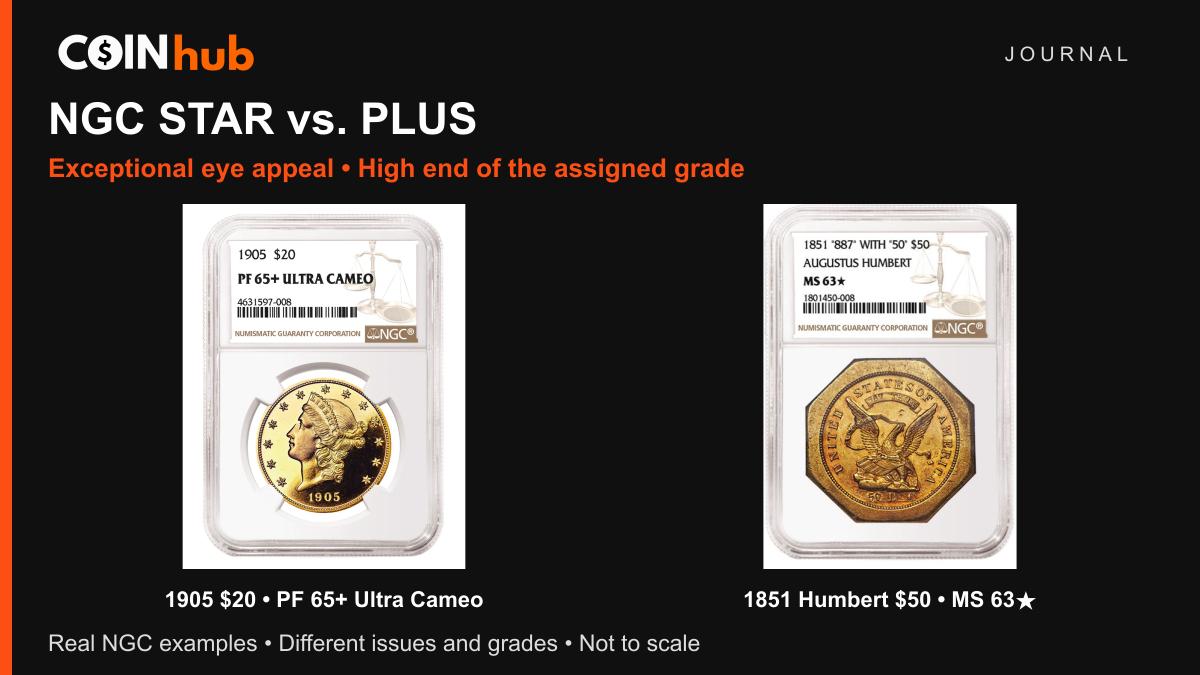
Two small symbols, two different questions about the coin
The difference between NGC Star vs. Plus matters when two attractive coins appear side by side in a dealer case. A ★ recognizes exceptional eye appeal for the assigned grade. A + identifies a coin near the upper end of that grade, approaching the next grade, with above-average eye appeal. Neither symbol replaces the number on the label.
Quick answer: Read the numeric grade first, then the Plus or Star, then any other designation. A Star is not a promise that the coin narrowly missed a higher grade, and a Plus is not a guarantee of a future upgrade.
Read the label one part at a time
NGC's explanation of Plus and Star treats the symbols separately. A Star coin can sit anywhere within its assigned numeric grade. A coin can also earn both symbols. These illustrative labels show how the distinction works:
| Illustrative label | What to read | What not to assume |
|---|---|---|
| MS 64 | The assigned numeric grade is 64. | It must be unattractive because it lacks a symbol. |
| MS 64+ | High end of MS 64, with above-average eye appeal. | It is already an MS 65. |
| MS 64★ | Exceptional eye appeal within MS 64. | It is necessarily at the top of MS 64. |
| MS 64+★ | Both distinctions apply; the numeric grade remains 64. | The two symbols add up to another grade point. |
For the surrounding label fields, use our guide to reading PCGS and NGC holders. Copy the complete grade into your collection record. Dropping a symbol makes later comparisons less precise; dropping the numeric grade makes them almost meaningless.
What the two photographed examples actually show
The graphic uses NGC's real photographs of a 1905 $20 graded PF 65+ Ultra Cameo and an 1851 Humbert $50 graded MS 63★. Their labels make the symbols visible in context. They are different issues, different grades and different formats of coinage, so this is a reading exercise—not a value comparison.
In the first label, Ultra Cameo is a separate part of the description. Keep it separate in your notes, too. Our Cameo, Deep Cameo and Ultra Cameo guide explains that terminology. Do not collapse every word after the number into a generic “premium grade.”
Check eligibility before interpreting a missing Plus
NGC's current grading scale lists Plus eligibility from XF 45 through MS 68 and PF 45 through PF 68. Its stated scope covers United States coins from 1792 onward, excluding U.S. bullion and modern commemoratives, and world coins struck before 1970. Check the current rules for the particular issue before treating the absence of a + as evidence about its quality.
This is especially useful when browsing mixed dealer inventory. A search result may combine a classic circulation issue, a modern commemorative and a bullion coin under one numeric-grade filter. A missing symbol does not make those three listings directly comparable.
A collector's worksheet for comparing two listings
Start a short record for each candidate. This is a practical comparison method, not an alternative grading standard:
- Identity: date, mintmark, denomination, variety and method of manufacture.
- Certification: service, certification number and the full grade exactly as displayed.
- Appearance: what attracts you, what concerns you, and whether the photographs show both sides clearly.
- Evidence: a link to the listing or sale result and any missing information you need from the seller.
- Total price: record the full acquisition cost on the same basis for each candidate.
Suppose two examples of the same issue are offered, one MS 64+ and the other MS 64★. You prefer the color on the Star coin, but its photograph hides an area of the reverse. The useful next step is to request a clear reverse image. Declaring the Star “better” from the symbol alone leaves the actual comparison unfinished.
Conversely, if the Plus coin appeals to you only because you hope to resubmit it, assess whether you would still want it at its present certified grade. An upgrade assumption should not do the work that examination and a fair same-grade comparison should do.
Does Star or Plus always mean a higher price?
Neither symbol supplies a universal percentage to add to a price guide. Build comparisons around the same issue and grade, then examine the coins and sale terms. A dealer's asking price and a completed auction result are different kinds of evidence. Our auction terminology guide helps keep hammer prices and buyer's premiums straight.
If you consult a population report, write down the filters used rather than quoting an isolated count. See what coin population reports mean before turning a small number into a rarity claim. A symbol can help organize the evidence; it cannot finish the valuation for you.
Common questions about NGC Star and Plus
Can a coin have both?
Yes. Read +★ as two distinctions attached to the same assigned grade. Keep any following designation in the record as well.
Does a Star make the coin a higher numeric grade?
No. Use the number actually printed on the holder when labeling your collection, comparing listings or describing the coin to another collector.
Which should I choose?
Choose only after the full coin, complete label and price fit your collecting goal. If a photo or description leaves a material question unanswered, resolve that question before choosing by a symbol.
Sources checked September 17, 2026: NGC's Plus and Star explanation and current grading scale, linked above. Label-table examples and the two-listing scenario are educational illustrations; no upgrade or fixed premium is promised.