
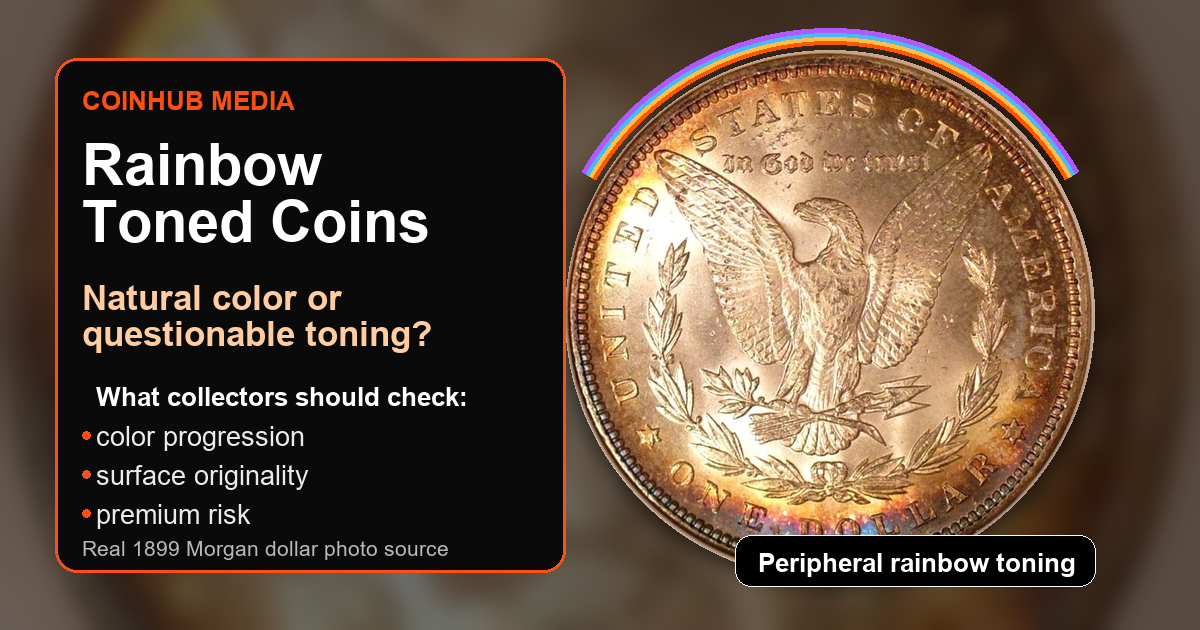
Rainbow Toned Coins: Natural Color or Artificial Toning?
Quick answer: Rainbow toned coins can be naturally toned, artificially toned, attractive, ugly, valuable, or risky. The color alone is not enough. Collectors should judge the coin's originality, luster, color progression, location of the color, holder status, and whether the premium still makes sense if the toning is later questioned.
Colorful coins get attention fast. A Morgan dollar with blue, gold, magenta, and orange around the rim can look more dramatic than a bright white coin in the same grade. That is why toned coins can bring strong premiums, but it is also why artificial toning exists.
The point is not to fear every colorful coin. Natural toning is part of coin collecting. Silver, copper, nickel, storage materials, paper, envelopes, albums, air, moisture, and time can all affect the surface. The point is to slow down before paying a rainbow premium just because a photo looks exciting.
What Coin Toning Actually Is
Toning is a surface color change that happens when the metal reacts with its environment. On silver coins, collectors often see gray, gold, blue, violet, amber, russet, or rainbow bands. On copper, color can move from red to brown, with many intermediate shades. On nickel coins, the effect is usually less dramatic, but color and haze can still affect eye appeal.
PCGS explains that graders look for original surfaces and natural-looking eye appeal. A coin can be toned or untoned and still look original. A toned coin that looks unnatural can receive a lower outcome, and coins judged artificially toned may receive a questionable-color result instead of a normal numeric grade.
Natural Toning Clues Collectors Can Check
A classic example is peripheral color on a silver dollar, where the rim shows amber, blue, violet, or magenta while the center remains lighter. That type of pattern can make sense when only part of the coin was exposed to sulfur-bearing paper, album material, or changing air flow.
Artificial or Questionable Color Warning Signs
- Color looks sprayed on: bright patches that ignore the coin's devices, rims, wear, and protected areas deserve extra caution.
- Luster looks dead: strong color over flat, lifeless, wiped, or polished surfaces can be a problem, not a premium.
- The color hides damage: PCGS notes questionable color can be used to enhance value or distract from surface problems.
- The premium is based only on photos: online images can exaggerate color, hide hairlines, or make ordinary toning look exceptional.
- The seller avoids direct answers: unclear return policy, vague source claims, or no straight-on and tilted photos all increase risk.
How Toning Affects Value
Toning can help, hurt, or do very little. Attractive natural toning on a popular series can add a premium because collectors value eye appeal. Dark, spotty, ugly, or dull toning can reduce demand. Questionable or artificial color can turn what looks like a premium coin into a problem coin.
| Situation | Collector takeaway |
|---|---|
| Certified coin with attractive toning | The holder can reduce risk, but the premium still depends on eye appeal, grade, series, and buyer demand. |
| Raw coin with dramatic color | Assume more risk. Ask for tilted-light photos and do not pay as if grading acceptance is guaranteed. |
| Dark or nearly black toning | Originality may be real, but eye appeal and market demand may be weaker. |
| Color on a cleaned coin | Color does not erase cleaning, hairlines, altered surfaces, or details-grade risk. |
A Simple Buying Rule
CoinHub buyer rule
Buy toned coins for what you can defend, not for the best-case photo. If the coin would be overpriced without the color, make sure the toning, surface originality, and return policy are strong enough to justify the risk.
For expensive toned coins, third-party grading matters. PCGS and NGC do not make every toned coin risk-free, but certification helps separate normal market-acceptable toning from coins that may be considered questionable color, cleaned, damaged, or altered.
What To Ask Before Buying a Rainbow Toned Coin
- Can I see straight-on photos and tilted-light photos?
- Does the luster still move under the color?
- Is the toning pattern believable for the coin type and storage story?
- Is the coin certified, raw, or in an old holder?
- What is the return policy if the color looks different in hand?
- Would I still like the coin if the color premium disappeared?
That last question is the most important. Toned coins are partly about taste. Two collectors can disagree on the same coin, especially when the premium is for color rather than rarity. If you are new to toned coins, study certified examples first and compare them with raw coins before paying a large premium.
If you are sorting a collection, compare this guide with CoinHub's articles on cartwheel luster, cleaned coins, milk spots on silver coins, and grading break-even decisions.
Sources and Research Notes
Research for this guide checked current Bing results for rainbow toned coins, natural versus artificial toning, and questionable color. PCGS articles on originality, toning, no-grade outcomes, and questionable color were used for grading-service context. Competitor results often focus on colorful examples or broad toning definitions; this CoinHub guide focuses on practical buying risk, surface originality, and when the premium is defensible.
FAQ
Are rainbow toned coins always valuable?
No. Some rainbow toned coins bring premiums, but value depends on originality, eye appeal, grade, series, demand, and confidence that the color is market acceptable.
Can artificial toning fool collectors?
Yes. Artificial toning can be used to make a coin look more attractive or to distract from surface problems. Expensive raw toned coins deserve extra caution.
Should I clean a dark toned coin?
No. Cleaning can permanently damage the surface and create details-grade risk. If a coin may be valuable, get an experienced numismatist or professional conservation service involved before doing anything.