
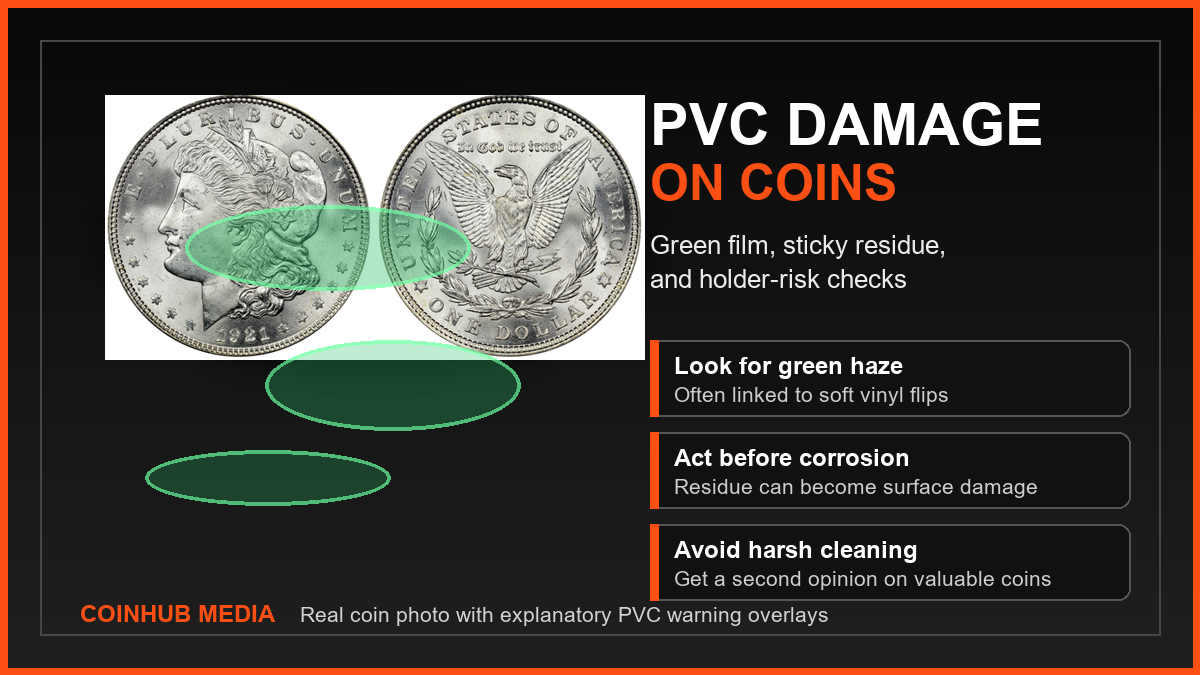
Quick answer: PVC damage on coins usually starts as green, hazy, oily, or sticky residue from soft vinyl holders. If it sits on the coin long enough, the residue can move from a removable surface contaminant into permanent surface damage. Do not scrub it. Separate the coin from the holder, handle it by the edges, and get a trusted opinion before trying any treatment on a valuable coin.
A green spot on a coin can make a collector nervous for good reason. Some green color is harmless toning, some is copper corrosion or verdigris, and some is PVC residue from old soft plastic flips. The mistake is treating all green marks the same.
PVC stands for polyvinyl chloride. In coin collecting, the concern is not the word itself. The concern is soft vinyl storage materials that can release plasticizers over time. That residue can sit on the coin, look oily or green, and eventually attack the surface.
What PVC Residue Can Look Like
PVC residue is often described as a green haze, green film, or thick green residue. On silver coins, it can show up as cloudy green patches. On copper, bronze, or nickel coins, it can be harder to separate from environmental corrosion without experience.
NGC Conservation has shown examples where PVC residue appeared as green haze or heavy green residue from long-term storage in poor holders. PCGS also warns that PVC from vinyl holders can appear as slimy green spots and worsen over time.
PVC Residue vs Toning, Milk Spots, and Verdigris
Collectors often confuse PVC with other surface issues because several problems can look green, cloudy, or unattractive in photos. Use this table as a first-pass filter, not a final diagnosis.
| Surface Issue | What It Often Looks Like | Why It Matters |
|---|---|---|
| PVC residue | Green haze, oily film, sticky patches, or thick green residue. | Can keep progressing and may damage the coin if left untreated. |
| Natural toning | Gray, gold, blue, russet, or rainbow color that follows the coin's surface naturally. | Can add or subtract value depending on eye appeal and originality. |
| Milk spots | White, cloudy marks often seen on modern silver bullion and proof coins. | Usually an eye-appeal problem, not the same as green plasticizer residue. |
| Verdigris/corrosion | Green or blue-green crust, especially on copper-based coins. | Often means environmental reaction has already affected the surface. |
If you are comparing surface issues, read CoinHub's guides to rainbow toned coins, milk spots on silver coins, cleaned coins, and bag marks on coins. PVC is a different problem because the storage material itself may be the source.
What To Do First If You Suspect PVC
- Remove the storage risk: take the coin out of the questionable soft holder and place it in a safer temporary holder, such as an inert flip, capsule, or other collector-grade non-PVC storage.
- Do not rub the coin: wiping can turn a residue problem into a cleaning or hairline problem.
- Photograph both sides: take clear photos before moving the coin further so you can compare whether the residue is spreading.
- Separate affected coins: do not keep suspect holders pressed against better coins in the same box or album.
- Get a second opinion: if the coin is rare, certified-worthy, or expensive, talk to a trusted dealer or conservation service before experimenting.
The safest answer is not always "clean it." A common coin with light residue is a different decision from a key-date silver dollar, early copper coin, or proof coin. On a valuable coin, the wrong home treatment can do more harm than the residue itself.
Can PVC Damage Be Removed?
Sometimes the residue can be removed before it permanently damages the surface. That does not mean every collector should treat coins at home. NGC Conservation notes that professional conservators use specific techniques to remove PVC residue without damaging the surface underneath when the coin has not already been harmed.
The distinction matters. Residue on top of the surface may be treatable. Corrosion, pitting, etched metal, or permanent staining is a different problem. Once the surface is damaged, the lost metal cannot simply be put back.
CoinHub buying-risk rule
If a seller describes a raw coin as "just needs a dip" or "easy PVC removal," price it as risk, not as a guaranteed conservation win. Ask for sharp photos under neutral light, check whether the coin came from a soft flip, and avoid paying a clean-coin premium for an unknown surface problem.
How To Prevent PVC Problems
Storage is the easiest part to control. Use coin holders, capsules, tubes, albums, or flips made for long-term numismatic storage. Avoid soft, flexible, unidentified plastic flips for better coins, especially in warm or humid conditions.
Check older inherited collections carefully. Many older collections were stored in materials that were common at the time but are not ideal today. If you see soft flips, cloudy plastic, oily surfaces, or green residue, sort those coins first before packing the collection away again.
Should You Submit a Coin With PVC?
Submitting a coin with active PVC can be a waste of money. PCGS says coins damaged by PVC can worsen over time and may not be encapsulated while the problem is active. If a coin is valuable enough to justify grading, it may be worth asking whether conservation should happen before grading.
For common coins, the best decision may be simple: move them into safer storage and do not pay a grading fee. For better coins, compare the potential value after conservation and grading with the cost and risk. CoinHub's grading break-even calculator can help decide whether a submission makes financial sense.
FAQ: PVC Damage on Coins
Is every green spot PVC?
No. Green color can come from PVC residue, corrosion, verdigris, toning, or environmental damage. The holder history, texture, location, and coin metal all matter.
Can PVC residue hurt silver coins?
Yes. NGC Conservation has documented green PVC residue on silver coins and warns that it can permanently damage surfaces if left to develop.
Should I clean PVC off a rare coin myself?
Be careful. Do not rub, polish, or scrub it. If the coin may have meaningful value, get a trusted dealer or professional conservation opinion before attempting treatment.
Bottom line: PVC damage is a storage problem that can become a surface problem. If you see green, sticky, or oily residue on a coin, move slowly, remove the bad holder, avoid harsh cleaning, and decide whether the coin is valuable enough for professional help.