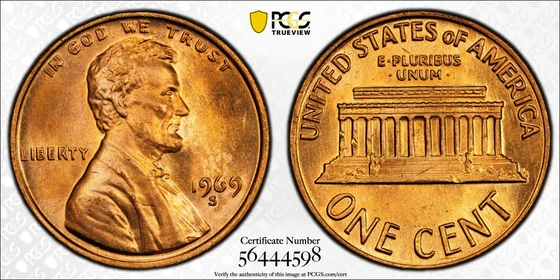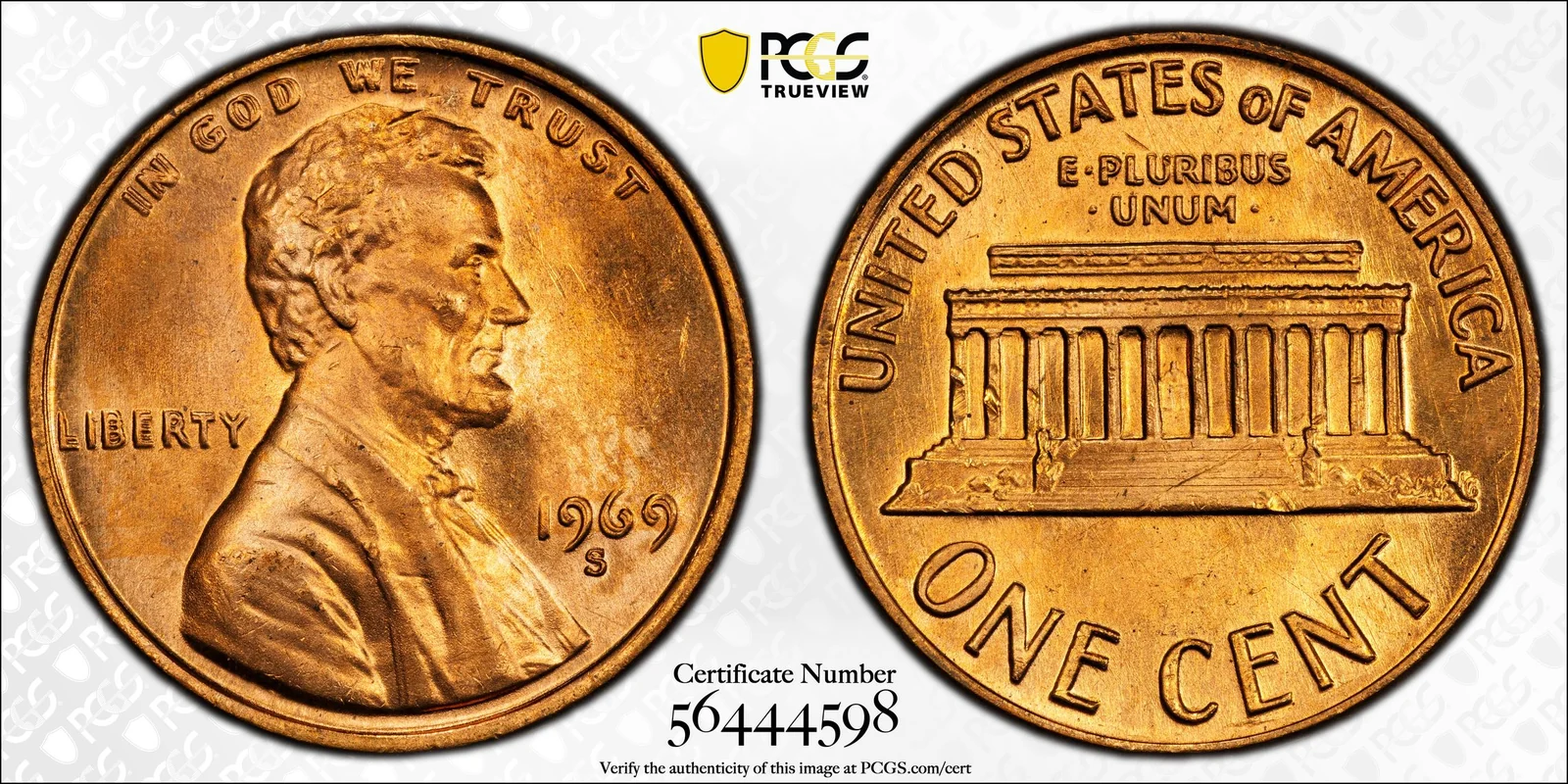
Identify the Reverse and Issue
The Memorial reverse ran from 1959 through 2008. Four different Lincoln-life reverses appeared in 2009, followed by the Union Shield in 2010. Keep those 2009 designs together as their own group rather than calling them Memorial or Shield cents.
An S does not always mean proof on older Memorial cents. Philadelphia normally omitted its letter, with a special P added in 2017. The 2019 W issues were collector products. Match the year and finish before treating a missing or unfamiliar letter as unusual.
Handle the 1982 Transition Carefully
Circulation production changed from a mainly copper alloy to copper-plated zinc during 1982. Both compositions exist with that date. Their nominal weights are about 3.11 grams and 2.50 grams respectively; use a checked scale and allow for wear, damage and measurement error.
Date size is a separate feature from metal. A small-date appearance alone does not prove a rare combination. Ordinary Shield cents use copper-plated zinc. Special 2009 collector cents used a different alloy from their circulation counterparts, so original set information can resolve an apparent mismatch.
Choose a Date or Finish Reference
For 1982, establish weight before choosing a date-size reference. A 1970-S small-date question needs a different comparison. Use the linked focused guides after this initial sorting, and keep damaged plating or suspected doubling unresolved until the correct diagnostics match.
For routine coins, submission costs can exceed any plausible premium. Collector-set provenance and undisturbed surfaces are more useful than a seller's 'rare' label. Circulating penny production ended in 2025, while collector production continues; that change does not establish scarcity for an ordinary saved cent.
Confirm what you have
- Reverse FamilyRecord Memorial, the specific 2009 design or Shield, together with the full date and any mintmark beneath it.
- WeightOn 1982 coins, record a repeatable weight separately from your date-size opinion. Neither observation is a final authentication.
- FinishSave collector packaging and photograph fields without glare. Mirrorlike patches from polishing do not establish proof manufacture.
Before you put a price on it
- Calling every 1982 small-date cent a rare copper example.
- Assuming no P is an error in every year.
- Equating damaged plating with a verified mint error.
Collector questions
Are all 2009 cents copper-plated zinc?
No. Circulation pieces used that composition, while special collector versions used the older copper-rich alloy. Identify the product before comparing weights.
Is an S cent always a proof?
No. Some Memorial-era S cents were circulation strikes. Year, surfaces and product provenance matter more than the letter alone.
Does the production stop guarantee rising prices?
No. Existing supply, collector demand and the specific coin's condition still determine its market. A production announcement is not a valuation.
Sources & further research
- U.S. Mint: Penny History and Specifications
- U.S. Mint: Penny Production FAQs
- U.S. Mint: 2009 Lincoln Bicentennial Compositions
- PCGS: Lincoln Memorial Small Dates and 1982 Weights
- U.S. Mint: Mintmark History

Reviewed 2026-10-12. Coin identification, grade and value are separate questions. No guide or checkmark is professional authentication or an appraisal.