Distinguish the Main Types
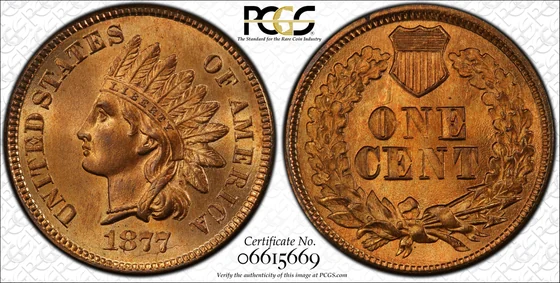
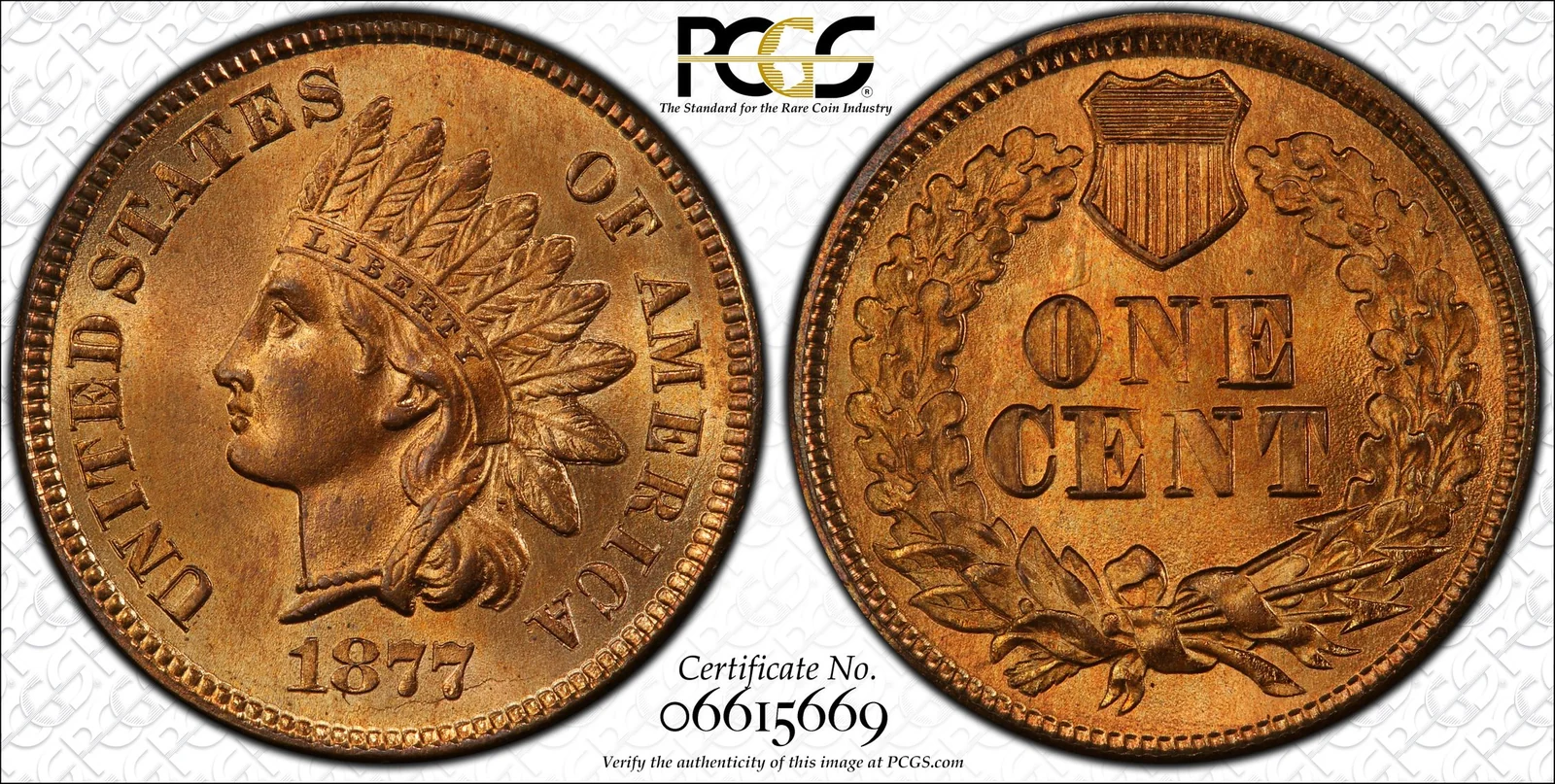
The series began in 1859 with a reverse lacking the later shield. From 1860, the reverse includes a shield above the wreath. Early pieces used an 88% copper, 12% nickel alloy; bronze production began during 1864, so that year requires a composition check.
Some 1864 bronze cents carry the designer's L on the ribbon. Do not identify that variety from a random bump on a worn coin. Record the ribbon area clearly and compare the whole design with the correct type reference before considering a premium.
Read Condition and Mint Together
Most Indian Head cents have no mintmark. San Francisco struck them in 1908 and 1909, using an S below the reverse wreath. An 1877 or 1909-S candidate warrants particularly careful authentication because altered dates and added mintmarks are known.
Examine the headband, hair and wreath for wear, but avoid converting the visibility of one word into a promised grade. Strike weakness, corrosion and surface alteration can complicate the reading. Natural brown color is not evidence that a coin is defective or unimportant.
Choose Comparable Evidence
First separate copper-nickel and bronze coins, then record date, mint and any attributed variety. A sale of a sharp bronze cent does not value a pale copper-nickel example merely because both say 1864. Proof manufacture also needs its own comparison group.
For a heavily worn common date, ask about an ordinary collector purchase rather than an exceptional auction result. For a possible key issue, preserve the coin and its collection history. Inspection by a qualified numismatist can clarify whether certification is useful before fees are incurred.
Confirm what you have
- Reverse TypeCheck for the shield at the top of the wreath. It separates the 1859 design from later reverses.
- 1864 IdentityRecord measured weight and ribbon details. Color alone cannot reliably separate original alloys from altered or corroded surfaces.
- ProblemsPhotograph pitting, scratches and suspicious date or mintmark areas. Do not scrape away deposits to improve the photograph.
Before you put a price on it
- Assuming every nineteenth-century cent has a large rare-coin premium.
- Using bronze examples to value copper-nickel cents.
- Declaring a grade from LIBERTY alone.
Collector questions
Can two 1864 cents be different types?
Yes. Both copper-nickel and bronze were issued, with further ribbon details on some bronze pieces. Establish the type before making a value comparison.
Where is the S mintmark?
On the reverse below the wreath, on the San Francisco issues of 1908 and 1909. A convincing-looking S still requires authentication on an important coin.
Should I brighten a dark cent?
No. Preserve its surfaces for inspection. Removing toning or deposits can leave permanent damage and make a useful comparison harder.
Sources & further research
- NGC: Indian Cent Types and Mintmarks
- PCGS: Grading Mint State Indian Cents
- PCGS: Indian Cent Type Classification
- PCGS: Early Small-Cent Copper-Nickel Alloy

Reviewed 2026-10-12. Coin identification, grade and value are separate questions. No guide or checkmark is professional authentication or an appraisal.