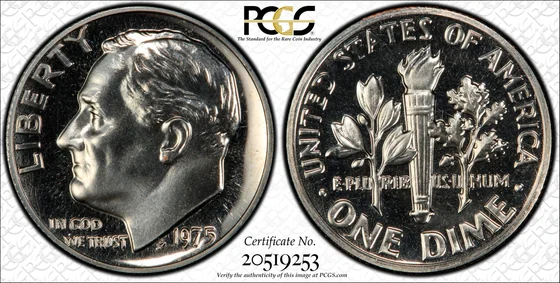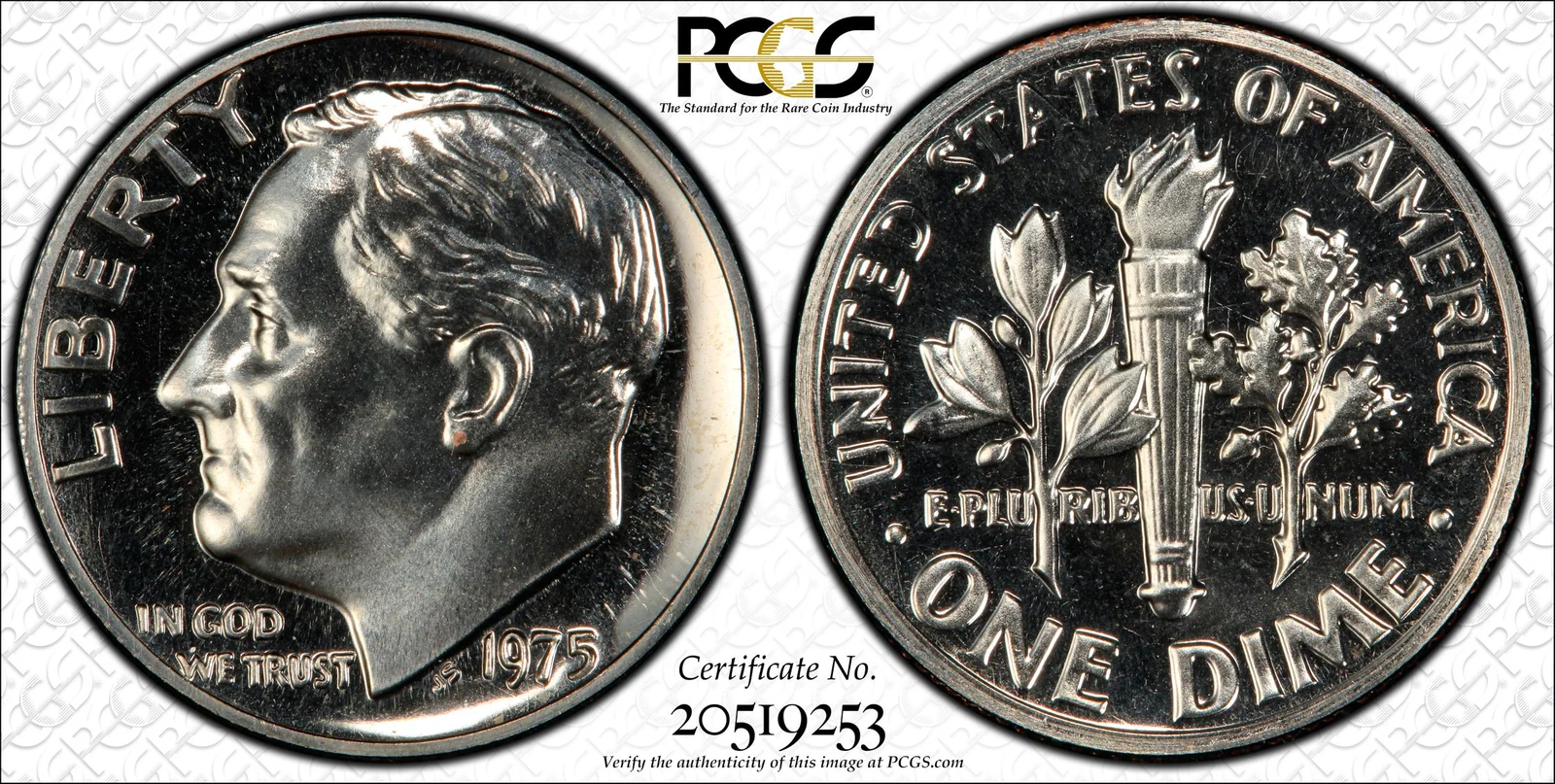
Separate Circulation Metal from Collector Metal
Roosevelt dimes began in 1946. Standard circulation pieces dated through 1964 are 90% silver; the 1965 change introduced copper-nickel clad circulation coins. Later silver proofs are a different product category, not evidence that ordinary later pocket-change dimes contain silver.
Silver proofs returned in 1992, and the Mint changed silver-proof specifications to 99.9% silver in 2019. Use the exact year's official product details. An S mintmark alone cannot choose between a clad proof and a silver proof of the same date.
Interpret an Absent Mintmark in Context
On 1946-1964 pieces, branch mintmarks appear left of the torch's base. No mintmarks were used on circulation issues dated 1965-1967. From 1968 the mark moved to the front above the date, and Philadelphia began using P in 1980.
An ordinary Philadelphia circulation dime without a letter is not the same as a rare No S proof. The finish and correct year must match the claimed variety. A polished circulation coin does not become a proof because its fields look reflective.
Avoid Conditional-Rarity Shortcuts
Sharp torch bands can matter to specialists, but strike detail, wear and contact marks are separate observations. Full Bands and Full Torch terminology depends on the grading service. Do not borrow a designation from a similar-looking internet photograph.
Compare sold examples within the same alloy, finish, date and mint group. A top-grade auction specimen is not representative of a bag of ordinary dimes. For 2026, inspect the actual design: the Mint's temporary anniversary dime is not a Roosevelt portrait issue.
Confirm what you have
- Composition BranchRecord date, edge appearance and product provenance. A visible copper-colored edge is useful context, not a complete authentication test.
- Mintmark LocationCheck the torch base on silver-era coins and the front above the date on later issues before declaring a letter absent.
- Proof ClaimPhotograph both sides and retain packaging. A rare No S claim needs proof manufacture established independently of the missing letter.
Before you put a price on it
- Treating every no-mintmark dime as the same rarity.
- Calling every post-1964 S proof silver.
- Assigning a top grade from brightness alone.
Collector questions
Is a 1965 dime normally silver?
No. Standard 1965 circulation dimes are clad. A claimed off-metal exception needs specialist testing and authentication rather than a color guess.
Why do some 1970s dimes lack a letter?
Ordinary Philadelphia circulation dimes did not carry P until 1980. That normal absence does not identify a No S proof.
Is an S enough to value a proof?
No. Confirm the alloy, finish, preservation and exact issue. Proofs with different compositions are not interchangeable comparisons.
Sources & further research
- U.S. Mint: Dime History and 2026 Design
- PCGS: Roosevelt Mintmarks and Proof Distinctions
- U.S. Mint: 2019 Silver Proof Composition
- PCGS: Roosevelt Silver Type Facts

Reviewed 2026-10-12. Coin identification, grade and value are separate questions. No guide or checkmark is professional authentication or an appraisal.